
Simple Thanksgiving Gratitude Activities for Kids (Plus a 5-Day Homeschool Plan)
November always feels like the month to slow down and say thank you. Between the leaves, the cooler mornings and the countdown to Thanksgiving, it’s the perfect time to weave a little gratitude into your homeschool.
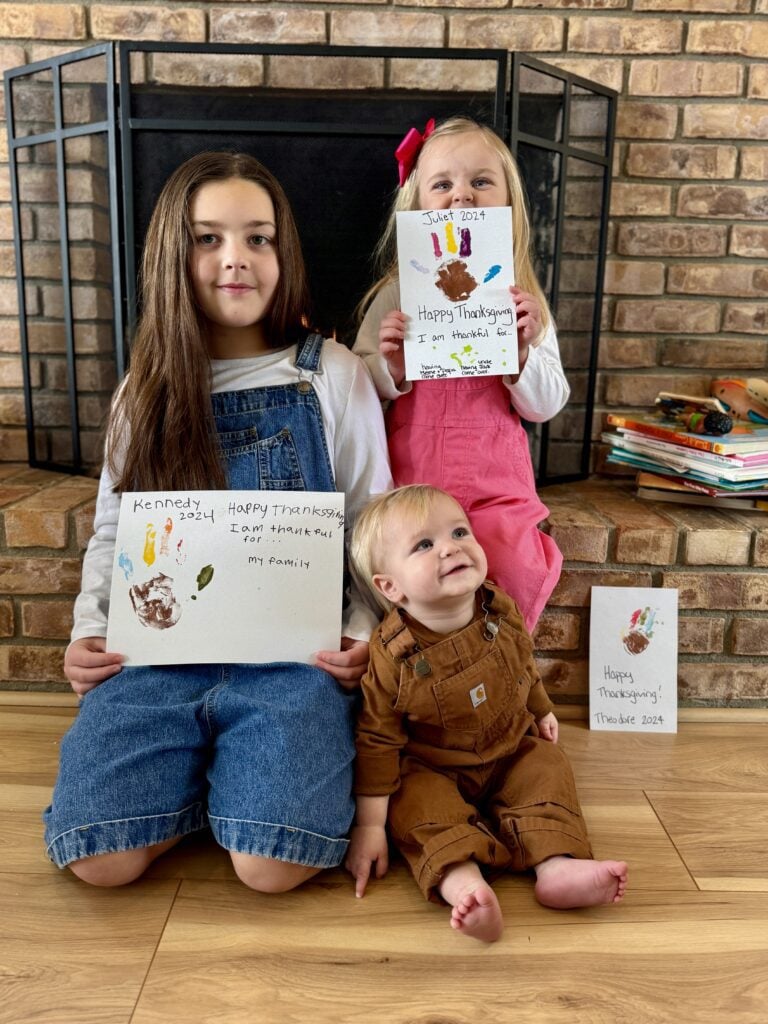
The good news? You don’t need a big unit study or hours of prep. A few simple gratitude activities, a stack of good picture books and a loose plan for the week are plenty. Here’s what that can look like in your home this year. Hand turkeys are a must for Thanksgiving. I like to have each child write in what they are thankful for on that same painting. Now it’s a fun holiday craft with a little bit of meaning behind it, too.
Why teach gratitude in your homeschool?
Gratitude isn’t just a nice feeling. It’s a habit kids can practice, and like any habit, it grows with repetition. When children stop to notice the good things around them, they start to see their days differently.
Homeschooling gives us a special chance to make that part of everyday learning. We can fold it into morning time, read-alouds, writing practice and even math, without adding one more thing to the to-do list.
12 simple gratitude activities for kids
Pick two or three that fit your family. Most take less than 20 minutes and use things you already have at home.
- Make a gratitude tree. Tape a bare branch (or a paper trunk) to the wall. Each day, kids write one thing they’re thankful for on a paper leaf and add it to the tree. By Thanksgiving, it’s full.
- Start a gratitude jar. Keep a jar and a stack of slips on the table. Add notes all month, then read them aloud together on Thanksgiving Day.
- Use gratitude journal prompts. Try “Something that made me smile today was…”, “A person who helps me is…” or “Something in nature I’m thankful for is…”. Little ones can draw their answer.
- Write thank-you notes. Have each child write or draw a card for a grandparent, neighbor, mail carrier or librarian. It covers handwriting practice, too.
- Go on a gratitude walk. Take a slow walk outside and name five things you’re thankful for in nature. Older kids can sketch their favorite in a nature journal.
- Play “thankful ABCs.” Go around the table and name something you’re grateful for that starts with each letter. Great for car rides.
- Make a thankful turkey. Trace each child’s hand for the turkey’s body and write something they’re thankful for on each paper feather.
- Build a gratitude chain. Each link is one thing you’re thankful for. Count the links each day for a sneaky bit of math.
- Do a kindness challenge. Choose one small act of kindness each day of Thanksgiving week, like helping with dinner or making a sibling’s bed.
- Create placemats or place cards. Kids decorate place cards for each guest with one reason they’re thankful for that person.
- Bake and share. Make muffins or bread together and deliver some to a neighbor. Measuring and doubling a recipe is real-life math.
- Learn the history. Read about the 1621 harvest celebration and Sarah Josepha Hale, who wrote letters for years asking for a national Thanksgiving holiday until President Lincoln proclaimed one in 1863.
A simple 5-day Thanksgiving homeschool plan
Want a little more structure? Here’s a gentle plan for the week before Thanksgiving. Keep your regular math and reading, and add one gratitude activity a day.
| Day | Read-aloud | Activity | Skill it covers |
|---|---|---|---|
| Monday | Bear Says Thanks | Start a gratitude tree and add the first leaves | Writing, fine motor |
| Tuesday | The Thankful Book | Gratitude journal prompt and drawing | Writing, reflection |
| Wednesday | Thank You, Sarah | Learn about Sarah Josepha Hale and write a thank-you letter to someone | History, letter writing |
| Thursday | 1621: A New Look at Thanksgiving | Talk about the 1621 harvest celebration, then take a gratitude walk | History, nature study |
| Friday | Balloons over Broadway | Make place cards for Thanksgiving dinner and bake something to share | Art, real-life math |
If you’re short on time, just do the read-alouds. A good book and a five-minute conversation about it is a full, meaningful lesson.
Thanksgiving picture books we love
These are great for snuggling up on the couch during a cozy November afternoon.
- Bear Says Thanks by Karma Wilson: a sweet, rhyming story about sharing with friends. Perfect for preschool and kindergarten.
- The Thankful Book by Todd Parr: bright, simple pages that make it easy for little ones to name what they’re thankful for.
- Thank You, Sarah: The Woman Who Saved Thanksgiving by Laurie Halse Anderson: the funny, true story of the writer who campaigned for a national Thanksgiving.
- 1621: A New Look at Thanksgiving by Catherine O’Neill Grace and Margaret M. Bruchac: a National Geographic book with photos that tells the story of the harvest celebration, including the Wampanoag side. Best for older kids.
- Balloons over Broadway by Melissa Sweet: the true story of the puppeteer behind the first Macy’s parade balloons.
Printables to make it even easier
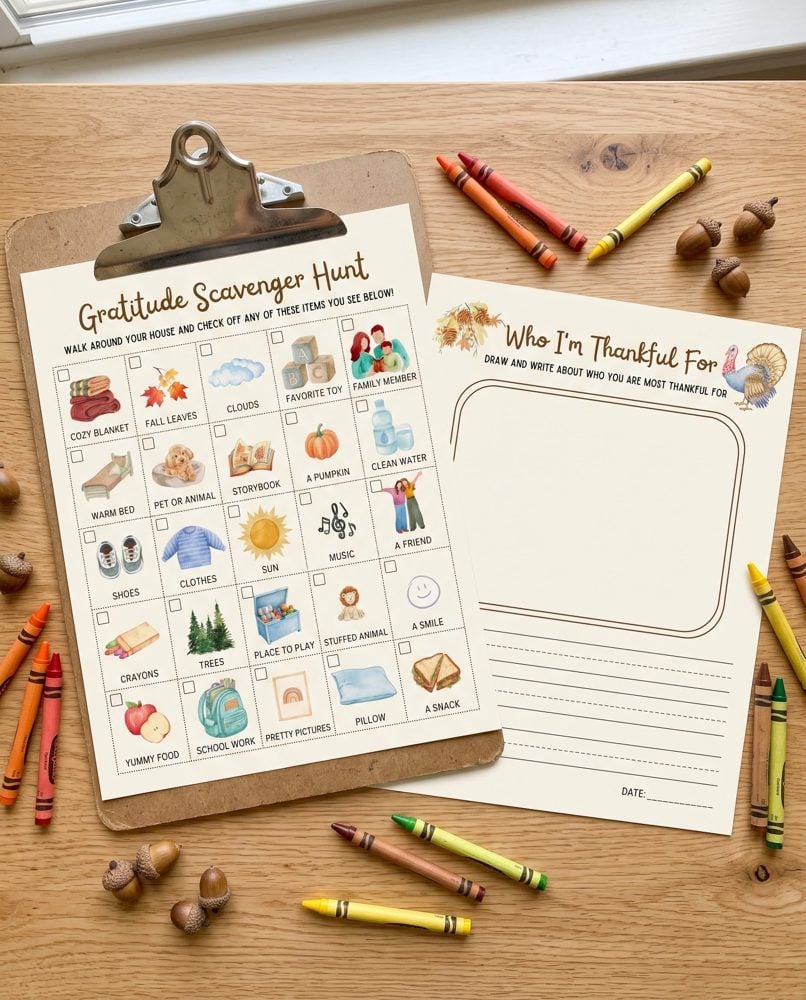
If you’d like gratitude pages that are ready to print, the Give Thanks Gratitude Bundle is this month’s bundle in the Homemade Homeschool Club. It’s ready to print for the week before Thanksgiving.
Bring the whole family into your learning with this gratitude bundle!
Members get every printable in the library, every bundle in the shop, and a brand-new bundle every month. Your first month is free, and then it’s $5 a month.
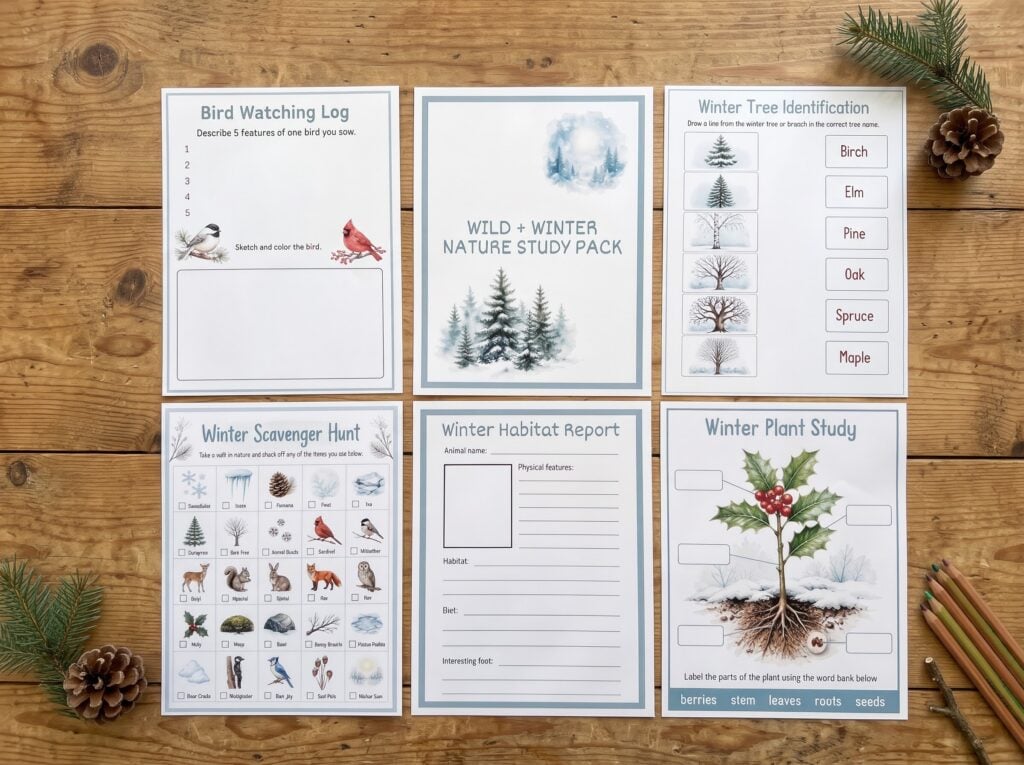
Looking ahead to winter? The Wild + Winter Nature Study is on sale in the shop through November 30!
Frequently asked questions
What age are these gratitude activities for? Most work for ages 3 to 10. Little ones can draw instead of write, and older kids can take on the journal prompts, thank-you letters and history reading.
How do I teach gratitude to a toddler or preschooler? Keep it short and concrete. Ask “What made you happy today?” at dinner, read a simple book like The Thankful Book, and let them add a sticker or drawing to the gratitude tree.
How can I teach the history of Thanksgiving? Start with what we know about the 1621 harvest celebration between the Pilgrims and the Wampanoag, using a book like 1621: A New Look at Thanksgiving. Then share how Sarah Josepha Hale’s letters helped make it a national holiday in 1863.
Do I need to stop regular lessons for Thanksgiving week? Not at all. Keep math and reading going, and swap your usual read-aloud and writing time for the gratitude activities.
Make this November meaningful
Gratitude doesn’t have to be one more thing on your list. A tree on the wall, a jar on the table and a few good books are enough to help your kids notice the good in their days, this month and all year long.
Which activity are you trying first? Let me know in the comments!
For more ideas, check out Today’s Deals and my Simple Homeschool Starter List.


